20 May 2013

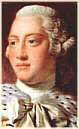
How the Prince Regent mounted a horse

Those who knew him well called him 'Prinny'. To the nation he was HRH George Augustus Frederick (1762-1830), Prince of Wales. He is best known as 'The Prince Regent'. Later he was to become King George IV. George's amorous entanglements as Prince of Wales, regent and King, coupled with a love of the good life, undermined his health and added to his girth.

The Times wrote about the Prince's weight and the despair of his doctors, describing the difficulty the Prince Regent had in mounting his horse: 
    "An inclined place was constructed, rising to about the height of two feet and a half, at the upper end of which was a platform. His Royal Highness was placed in a chair on rollers, and so moved by the ascent, and placed on the platform, which was then raised by screws high enough to pass the horse under; and finally, his Royal Highness was let gently down into the saddle. By these means the Regent was undoubtedly able to enjoy in some degree the benefit of air and exercise".

27 April 2013

John George IV of Saxony was lovesick

As a child Caroline of Ansbach (1683-1737), George II of Great-Britains’s Queen Consort, had to cope with a hostile stepfather. In 1692, after the death of her father Johann Friedrich of Brandenburg-Ansbach (1654-86), her mother Eleonore Erdmuthe of Saxe-Eisenach (1662-96) married the 6-year-younger Elector John George IV of Saxony (1668-94). He had a preference for his teenage mistress, Sibylle von Neitschütz (1675-94), a daughter of his late father's notorious mistress. His father had tried to keep both his sons away from Sibylle, because she may have been John George’s illegitimate half-sister.

While Eleonore suffered from miscarriages and phantom pregnancies, Sibylle gave birth to a healthy baby girl. With her hold over the Elector increasing, Sibylle continually worked upon John George’s distaste for his wife. 
John George had had violent tantrums since his youth. Once a marital quarrel grew so fiery, that the incensed John George wounded several persons, and would have stabbed Eleonore, had he not been disarmed by his strong brother August, who tore “three blades, one after another, from his brother’s hand”, while “cutting all his fingers”. Later, John George forcefully bedded his hated wife again. Eleonore was now constantly exposed to “hard usuage”, and even feared for her life. 

Suddenly, Sibylle became ill and lay sick for 9 days. She was diagnosed with smallpox. All the time, John George remained at the bedside of his beloved mistress. Five doctors were consulted, but to no avail. Sybille died around 7 a.m. on April 4, 1694. She was only 19 years old.
Due to John George’s immoderate grief “a black melancholy and distraction were visible in his looks and behaviour”. In the night of April 19, little spots appeared on his body, too. On April 27, John George grew light-headed, and “continued raving mad”, until he expired at 5 p.m. at the age of 25. 

20 April 2013

Another theory about British King George III's illness

Modern medicine may help us to discover the real reasons behind King George III's erratic behaviour, writes historian Lucy Worsley. Using the evidence of thousands of George III's own handwritten letters, Dr. Peter Garrard and Dr. Vassiliki Rentoumi have been analysing his use of language. George III, when ill, often repeated himself, and at the same time his vocabulary became much more complex, creative and colorful. 

These are features that can be seen today in the writing and speech of patients experiencing the manic phase of psychiatric illnesses such as bipolar disorder. Mania, or harmful euphoria, is at one end of a spectrum of mood disorders, with sadness, or depression, at the other. George's being in a manic state would also match contemporary descriptions of his illness by witnesses. 

17 November 2012

A Vietnamese Royal Wife Swap

In the 13th century Emperor Ly Hue Tong of Vietnam (1194–1226) had married a beautiful relative of Tran Thu Do (1194–1264). After Hue Tong’s accession, Tran Thu Do became his all-powerful grand chancellor, and further secured his position by marrying 2 of his nephews to the daughters of Hue Tong. 

Emperor Hue Tong suffered increasingly from mental problems. In 1224 he was forced to abdicate in favour of his youngest, 6-year-old daughter, Chiêu Hoàng (1218-78). Soon afterwards, the young Empress was forced to abdicate in favour of her husband, Tran Thái Tông (1218-77). In 1226 ex-Emperor Hue Tong was forced to commit suicide.

When the teenage Empress Chiêu Hoàng did not give birth to a son for some time, the all-powerful Tran Thu Do became worried. In 1237 he forced his eldest nephew, Tran Liêu (1211–51), to give up his 3-months pregnant Royal wife, Thuân Thiên (Chiêu Hoàng’s elder sister), to his younger brother, the Emperor Tran Thái Tông. Tran Thái Tông’s wife and Empress, Chiêu Hoàng, was downgraded to Princess, when her pregnant elder sister, Thuân Thiên (1216–1248), took her place.

Furious at losing his pregnant royal wife, Tran Liêu rose in revolt, while Tran Thái Tông felt so awkward about the situation that he wanted to become a monk. Tran Thu Do, however, succeeded in persuading Tran Thái Tông to return to the throne, while he forced Tran Liêu to surrender. Tran Thu Do wanted to behead his rebellious nephew, but was stopped by Tran Thái Tông.

The new Empress, Thuân Thiên, subsequently gave birth a Prince. Apperently, her younger sister, the former Empress Chiêu Thánh, too, was at first married to her brother-in-law, Thuân Thiên's ex, but in 1258 Chiêu Thánh was married to general Lê Phu Trân. She had 2 children with him.


14 November 2012

Chinese Emperor Yang-ti (569-617)

After poisoning his father Wen-ti (541-604), Yang-Guang acceded the throne as Yang-ti. As a youth, he had served in the south and married a girl of the leading southern Liang family. He also had several concubines. He was known to suffer from mood changes and depressive periods.

Chinese Emperor Yang-ti
Within a few years of his accession, Chinese Emperor Yang-ti (569-617)'s love of luxury became apparent. He started a building program at exorbitant costs. Three major campains against Korea resulted in crippling losses of live and money. Ruthless attempts to crush the opposition couldn't stem the tide and in 617 Yang-ti was forced to abdicate and flee. He was strangled by the son of a minister whom he had disgraced.

As Emperor, Yang-ti had a marked love for luxury. He used forced labour for the building of a new city, Luoyang, close to the grain-producing regions of China. Luoyang was ornamented with palaces, an artificial lake with islands and a pleasure park. Its cost was exorbitant. Yang-ti loved to make boat trips or horse rides at night, while he was surrounded by young girls, singing and reciting poems. He also undertook long journeys throughout his Empire with an immense following.

Early in his reign Yang-ti had ordered the construction of a Grand Canal and a restoration and extension of the Great Wall. Like his father, Wen-ti, Yang-ti had new Buddhist temples constructed. With military might he tried in vain to subdue Korea. He fought the Turks, too, but diplomatic missions and bribery, inciting the eastern against the western Turks and vice versa, had better results.
The wars and building projects resulted in crippling losses of life and money, but Yang-ti ignored the mounting unrest. The unrest increased when the Chinese suffered a crushing defeat at the hands of the Turks in 615, when Yang-ti was forced to move his seat to the south. When in addition the Yellow River flooded, peasant uprisings swept the country. Ruthless attempts to crush the opposition failed.

In 618 Yang-ti’s most-beloved son, the dutiful Yang Gao (607–618), was killed before his eyes, and Yang-ti himself was subsequently strangled. His younger son Gong-ti (±611-618) was placed on the throne with a northern military figure, Li-Yuan, as regent. The next year the regent deposed the puppet Emperor and declared himself the founding Emperor of the Tang dynasty.