6 March 2016

Darya Nikolaevna Saltykova (1730-1801), the Russian Elisabeth Báthory

In the late 1750s ominous rumours began to spread in Moscow about terrible things taking place in the home of the young widow Darya Nikolayevna Saltykova. Born in 1730 as daughter of Nikolai Avtonomovich Ivanov and Anna Ivanovna Davydova, she was married at a young age to the noble Gleb Alexeyevich Saltykov, an uncle of Nikolai Saltykov (1736-1810), a tutor of the future Emperor Paul I of Russia and his 2 sons. Darya gave birth to 2 sons: Theodore (1750-1801) and Nicholas († 1775). She was widowed by 1755 at the age of 26.

People spoke of 100s of house-serfs tormented brutally by the lady landowner, about cruel torture and murder. At first, complaints to authorities about the deaths at the Saltykova estate were ignored, because Saltykova was well-connected with powerful people at the royal court. Eventually, however, relatives of murdered women were able to bring a petition before Empress Catherine II 'The Great'. She decided to form a commission to investigate and try Saltykova publicly.

Darya Nikolaevna Saltykova using a whip

Saltykova was arrested in 1762 and held for 6 years, while the commission conducted a painstaking investigation. Many witnesses were questioned and records of the Saltykova estate were examined. Finally, the commission was compelled to admit that Saltykova’s brutality had caused the death “if not of a hundred people, as had been reported by informers, then of at least fifty people for certain”.

It had been established that the sadistic lady beat her house-serfs (mostly maids), using different objects and implements; she poured boiling water over them, and froze them in the snow. Following her orders, the stablemen would whip disobedient house-serfs to death. In its report, the commission attributed the enormities to the mistress’s anger aroused at the sight of “carelessly washed floors and clothes”.

Saltykova had murdered her servants in a house standing in the center of Moscow, under the jurisdiction of Moscow police, who - it turned out - were bribed from top to bottom by Saltykova. The police readily drew up documents certifying yet another 'accidental death' of one of Saltikova's house-serfs. Even the leaders of the Chief Criminal Investigation Department took bribes, resulting in long delays during the investigation.

In 1768 Saltykova was chained on a platform in Moscow for one hour with a sign around her neck with the text: “This woman has tortured and murdered”. Many people came to look at her during the one hour she was displayed. Afterward, she was imprisoned for life in the basement of the Ivanovsky Convent in Moscow. Saltykova showed no repentance for what she had done and used to curse nearly everyone she saw. She remained locked-up for 33 years, dying on 27-12-1801 and was buried next to her relatives in the Donsky Monastery necropolis.

Sources: Evgenii V. Anismov: Five Empresses (Court Life in Eighteenth-Century Russia), 2004; Wikipedia. For further reading see:  Russia Pedia.

31 July 2015

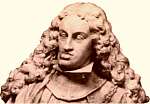
Michele Imperiali (1719-82), Prince of Francavilla

Michele Imperiali Junior, Prince of Francavilla, was born on July 7, 1719. He was named after his grandfather, another Michele Imperiali (1673-1738). When the elder Prince disagreed with the verdict of an honest Judge, he had him exiled. Later, when his retainers happened to kill those of a neighbour, Francavilla Sr. was ordered to arrest the culprits. Instead of doing so, he rode to Naples, where the King refused to see him. He was told to arrest his men, or remove himself from Naples. While on his way to make another appeal for a royal audience the Elder Prince died of a fit on the steps of the Royal Palace. His grandson, Michele Jr., took over the title, because his son, Andrea Imperiali, had predeceased him.

One Michele Jr.'s ancestors had married into the Princely Grimaldi family of Monaco. His mother was Anna Maria Caracciolo (1702-1731), a daughter of the 3rd Prince Torella. Michele married Eleonora Borghese, a relative of Pope Paul V (1552–1621).

Heraldic shield of
the Imperiali Family
From 1770 onwards Michele Jr. was a Knight of the Golden Fleece. He acted as major domo to Ferdinand I (1751–1825), King of the Two Sicilies. Michele rented the magnificent Palazzo Cellamara in Naples. He restored and redecorated the Palace in the French style. His picture gallery was valued at 30,000 ducats. It contained a "Virgin and Child" by Titian, a "Magdalen anointing the feet of Jesus" by Paul Veronese, and many romantic scenes of ruins and architectural panels by Pannini. In addition, Michele collected classical sculpture. The palace’s furniture, porcelain and tapestries were exquisite, too. Its terraced gardens were among the most splendid in Naples.

Michele was known for his splendour and magnificently extravagant hospitality. He would entertain around 750 guests almost every other day. In 1770 Casanova was among his guests. After dinner, Casanova wrote, "the Prince led us to a pool beside the sea". A priest, Don Paolo Moccia, jumped stark naked into the water and without making any movement he floated like a pine plank. Next, Michele made all his pages dive into the pool together. These were boys of about 16 years old, as comely as cupids. On leaving the breasts of the waves almost simultaneously, they swam up under the public's eyes, "developing in strength and grace, and performing a thousand evolutions". All those Adonises were the “Sweethearts” of the homosexual Prince of Francavilla. On request, a chorus of female beauties gave a brilliant swimming display in the marble pool, too.

Michaele Imperiali Jr. died on February 10, 1782, aged 62.

Sources: Harold Acton's "The Bourbons of Naples", H.R.H. Princess Michael of Kent's "Crowned in a Far Country", it.wikipedia.org, George J. Homs, Nobilità Mediterranea.


27 May 2015

Katherine Savage developed the delusion that she was a Queen

Lady Katherine Savage was a daughter of John Savage (±1603-1654), 2nd Earl Rivers, and Catherine Parker, daughter of the 13th Baron Morley. Katherine married Sir Charles Sedley (1639-1701). Sedley was an English wit, dramatist and politician, but also a notorious rake and libertine, one of the “Merry Gang” of courtiers at the Court of King Charles II of Stuart. He inherited his families baronetcy after his elder brother’s death. The pair had a daughter, Catherine (1657-1717), later Countess of Dorchester and mistress of King James II & VII (1633-1701).

Charles Sedley
Katherine Savage became mentally ill, developing the delusion that she was a Queen, and demanding to be addressed as “Your Majesty”. As her illness progressed, she was send to live with an order of English Benedictine nuns at Ghent. Sedley assured his wife’s acceptance by the nuns by agreeing to give the convent £400 a year to help them clear their debts. As a nun Katherine was tricked by a priest, acting on her husband’s orders, to give up her wonderful jewellery. The discovery of the loss of her jewels, emblems of her imagined royal status, distressed Katherine even more. She died in 1670.

Sedley tried to obtain a divorce in vain. With Ann Ayscough he had 2 illegitimate sons, William and Charles Sedley. Upon Sedley’s death on August 20, 1701, the Sedley baronetcy became extinct.

27 February 2014

An unlikely suitor for the Princess Royal was send to Bethlem

English Queen Consort Charlotte, wife of King George III, received a letter from Thomas Stone. The son of a floor-cloth painter, Stone was “a heavy looking man, about 33 years of age” and “a native of Shaftesbury”. His letter mentioned “a very warm passion which he had conceived of her eldest daughter; and hoping, if their majesties approved of the idea of his marrying her, he and the Princess Royal would be a very happy couple”. 

Princess Royal Charlotte (1766-1828)
Not content to rest his suit there, Stone appeared in person at St. James’s Palace and “begged of leave to be introduced in form, as for not having received an answer, he conceived his proposal was acceded to”. Apparently, Stone had become fixated on the Princess Royal, Charlotte (1766-1828). 
He wrote the following poem: 
To her Highness the PRINCESS ROYAL
Thrice glad were I to be your willing slave,
But not the captive of the tool or knave
With woe on woe you melt my sighing breast,
Whilst you reject your humble would-be guest.

When Stone took his amorous quest to Kew, he was seized and sent to Bethlem along with 'a Verbal Message' from the King requesting his admission. The mad-doctors reported about “evident marks of insanity having appeared in many parts of his conduct”. During his 1st year’s stay at Bethlem, Stone wrote additional letters to King George III, who requested his continuing detention. Transferred to the incurables ward in 1788, Stone was to spend the rest of his life in Bethlem, and died there in 1805.


6 November 2013

Mad King Carlos II of Spain (1661-1700)

The Habsburg Kings of Spain descended from Queen Joanna "The Mad" of Castile (1479-1555), who was mentally unstable and prone to fly into rages. Her descendants increased her inheritance by inbreeding: they preferred to marry either their cousin or their niece. These incestuous marriages resulted in the mentally and physically handicapped King Charles II (1661-1700), who possessed the physical peculiarities of the Habsburgs to an extent that made him little short of a monstrosity. 
The Habsburg King Charles II of Spain (to the right) was sadly degenerated with an enormous misshapen head. His Habsburg jaw stood so much out that his two rows of teeth could not meet; he was unable to chew. His tongue was so large that he was barely able to speak. His intellect was similarly disabled. His brief life consisted chiefly of a passage from prolonged infancy to premature senility. Charles was unable to walk properly, because his legs would not support him and he fell often. His body remained that of an invalid child. He was a mentally retarded and hypersensitive monarch, who grew steadily worse over the years. By the age of 35 his hair had fallen out, his teeth were nearly gone and his eyesight was failing. "Many people tell me," Charles II once said, "I am bewitched and I well believe it; such are the things I experience and suffer." 
Charles II of Spain was the result of generations of inbreeding within the Habsburg family. His mother was a daughter of his father's sister who had married her cousin the Emperor Ferdinand II. His great-grandfather, Philip II of Spain, too, had married a daughter of his sister who had married her cousin the Emperor Maximilian II. As a result, Charles II of Spain descended multiple times from Joanna "The Mad" as shown below.

The ancestors of Charles II often married either their cousin or their niece
The inbreeding coefficient of the Spanish Habsburgs increased strongly along generations from 0.025 for Philip, husband of Joanna "The Mad", to 0.254 for Charles II. In addition to inbreeding due to unions between close relatives, ancestral inbreeding from multiple remote ancestors makes a substantial contribution to the inbreeding coefficient of most Kings. It is speculated that the simultaneous occurrence in Charles II of Spain of 2 different genetic disorders (a hormone deficiency and tubular acidosis) that are determined by recessive alleles at 2 unlinked loci, could explain most of the complex clinical profile of this king, including his impotence and infertility which led to the extinction of the dynasty.

Sources: